


What I Re-Learned by Becoming a Hands-On Coder, Marketer, and Founder—Again

What returning to hands-on building taught me about code, marketing, and decision-making as a founder—again.

Years ago, I was a hands-on builder—writing code, shaping products, talking to customers, figuring things out one imperfect decision at a time. As my last startup grew, my role evolved into core management. Strategy, scale, people, decisions at a distance. That shift was necessary. It was also irreversible.

Until it wasn’t.

When I began working on The Bakers Junction 2 years back, I didn’t plan to go back to the ground level. It started as an experiment. A small idea. A WordPress site. No revenue model. No pitch deck. No team.

And then, slowly, it pulled me back into the work I hadn’t done in years—real work.

Here’s what becoming hands-on again taught me.

1. Management Memory Fades Faster Than You Think

I thought I remembered what it was like to build from scratch. I didn’t.

When you spend years in leadership roles, your instincts change. You think in abstractions—roadmaps, priorities, OKRs. But when you’re the one fixing broken layouts, debugging flows, writing copy, tweaking SEO, watching analytics daily—you relearn humility.

Things take time. Decisions compound slowly. And nothing works the first time.

Being hands-on again reminded me that early-stage progress is quiet, messy, and deeply unglamorous.

2. Code Grounds You in Reality

When you write code—or even closely work with it—you lose the luxury of vague thinking.

You can’t “intend” functionality. You have to implement it.
You can’t assume scale. You have to design for it—or accept the constraints.

At TBJ, returning to coding (with help, tools, and a lot of relearning) forced me to think clearly again. Trade-offs became visible. Complexity stopped being theoretical.

It made me a better decision-maker—because reality was right there on the screen.

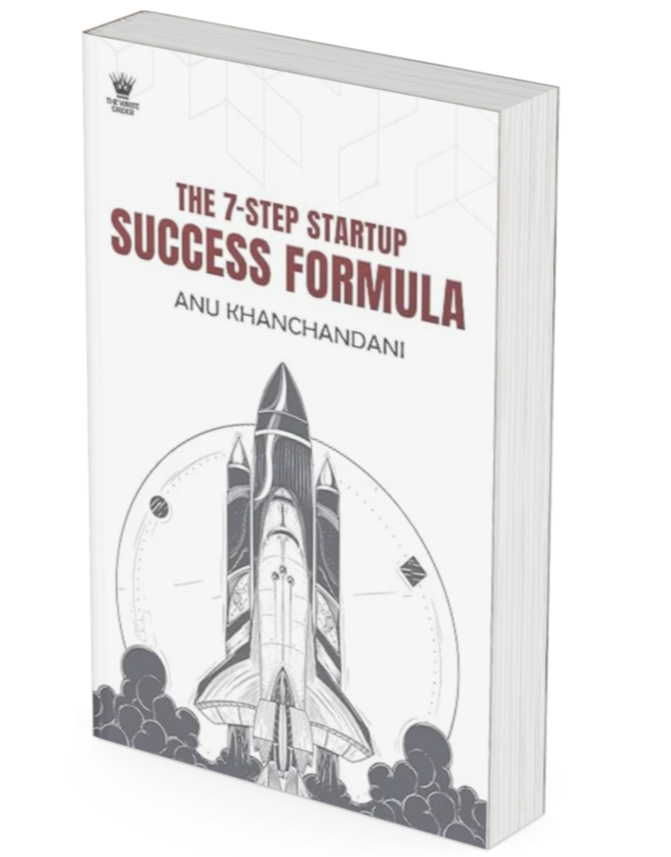
THE 7-STEP STARTUP SUCCESS FORMULA - DR. ANU KHANCHANDANI

Every entrepreneur’s journey is a mix of failures and successes. The probability of failure is higher, however, there is a way to grow and keep growing until you build a successful startup. This book is one such guide to help you with 7 formulas for your success.

3. Marketing Is Not Campaigns. It’s Attention Earned Daily

Working hands-on with marketing again—SEO, content, user journeys, analytics—was humbling.

Organic growth is slow. It doesn’t respond to urgency.
It rewards consistency, clarity, and patience.

Watching TBJ grow to steady monthly traffic with zero ad spend reminded me of something I now repeat often:

Marketing is not about noise. It’s about relevance over time.

As a manager, you often see marketing through reports. As a builder, you feel it—post by post, click by click.

4. Tools Have Changed. Fundamentals Haven’t.

Yes, the ecosystem is different now—React, Replit, modern stacks, automation tools, AI-assisted workflows.

But the fundamentals haven’t moved an inch.

  • Users still want clarity

  • Products still need to solve one real problem well

  • Growth still follows trust

Being hands-on again showed me that tools don’t replace thinking. They only amplify it—good or bad.

5. Founders Who Stay Close Build Better Judgment

  • There’s a moment when founders move “above” the work—and that’s necessary for scale.

    But stepping back too far comes at a cost.

    Rebuilding TBJ with my own hands—even temporarily—sharpened my judgment in ways meetings never could. I could sense friction earlier. I could spot false optimism faster. I could separate signals from noise.

    That kind of intuition doesn’t come from dashboards.
    It comes from proximity.

6. You Don’t Lose Your Builder Identity. You Just Park It.

I used to think moving into management meant leaving the builder behind.

It doesn’t.

The builder waits. Quietly. Patiently.
And when circumstances invite you back—through a new venture, a new challenge—you realise it never left.

Coming back to hands-on work didn’t feel like regression. It felt like integration.

Closing Thought

Returning to coding, marketing, and building at TBJ wasn’t about nostalgia. It wasn’t about proving anything.

It was about remembering.

Remembering how businesses actually grow.
How products really break.
How founders truly learn.

And perhaps most importantly—how staying close to the work keeps you honest, grounded, and sharp.

Some lessons can only be relearned by doing.
Which is why building Version 2 of The Bakers Junction now feels like the most natural next step—and one I’m genuinely excited to bring into the world. 

SOON..VERY SOON…

How to Validate Your Startup Idea
Email
Name

Looking for Strategic Mentorship?

I’ve mentored dozens of startups, helping them avoid costly mistakes, scale sustainably, and navigate complex challenges.
If you’re ready to leverage strategic mentorship as a competitive advantage, book a free 30-minute consultation:
👉 https://links.thegreycells.com/BookAppointment

Success isn’t just about hard work. It’s about who’s guiding you.

Leave a Comment

Your email address will not be published. Required fields are marked *

Scroll to Top